Education
University of Tasmania
Bachelor of Environmental Design 1995-1997
Bachelor of Architecture (Hons) 1998-1999
Employment
Graeme Gunn Architects 2000-2001
Neometro Architects 2001-2003
Neil Clerehan Architect 2003
Gregory Burgess Architects 2003-2005
City of Hobart 2005-2008
Matt Williams Architects 2008-2009
Freelance Architect 2010-2013
Terroir Architects 2012-2015
Core Collective Architects 2015-2019
Christopher Clinton Architect 2019-present
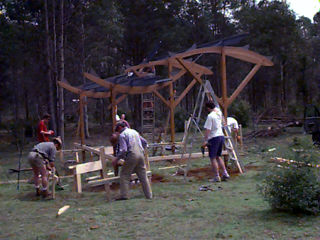
1. University of Tasmania, 1996, Holly Hut, photograph
2. University of Tasmania, 1996, Holly Hut, photograph
3. University of Tasmania, 1996, Holly Hut, photograph
4. Christopher Clinton Architect, 2019, Newtown Roadhouse + Studio, photograph, viewed 10 February 2022, <https://christopherclinton.com.au/project/newtown/>
5. Christopher Clinton Architect, 2019, Newtown Roadhouse + Studio, photograph, viewed 10 February 2022, <https://christopherclinton.com.au/project/newtown/>
6. Christopher Clinton Architect, 2019, Newtown Roadhouse + Studio, photograph, viewed 10 February 2022, <https://christopherclinton.com.au/project/newtown/>
7. Gregory Burgess Architects, 2006, Victorian Space Science Education Centre, photograph, viewed 10 February 2022, <http://www.gbarch.com.au/projects/2006/victorian-space-science-education-centre/>
8. Gregory Burgess Architects, 2006, Victorian Space Science Education Centre, photograph, viewed 10 February 2022, <http://www.gbarch.com.au/projects/2006/victorian-space-science-education-centre/>
9. Christopher Clinton Architect, 2019, SUSH, photograph, viewed 10 February 2022, <https://christopherclinton.com.au/project/sush/>
10. Christopher Clinton Architect, 2019, SUSH, photograph, viewed 10 February 2022, <https://christopherclinton.com.au/project/sush/>
11. Christopher Clinton Architect, 2019, SUSH, photograph, viewed 10 February 2022, <https://christopherclinton.com.au/project/sush/>



Chris Clinton describes the practice of LBM as personally an essential for his practice. Chris has always been interested in detailing architecture, focussing construction systems and junctions. As a teenager, Chris learnt the trade of a Fitter and Turner, working to fabricate tools, components, and products from metal, so the making has been central to his understanding of design. Chris considers himself ‘practically minded’ and has always enjoyed making things. His father built their first home, and he remembers being fascinated at his grandfather’s workshop growing up. However, Chris found that he was not getting much satisfaction out of the pure production side of trade. He felt there was not much excitement about the industry he was working in and not the opportunity for creativity in which he sought after. This eventually led him down the path of architecture.
Chris acknowledges the importance of his past trade training to his approach to architecture and furniture, particularly his interest in experimenting with materials. Thinking through the buildability of details is a key part of his design process. He believes that processes of experimenting and Learning by Making (LBM) that he explored at university are directly transferable to buildings as they encourage an understanding of the industry.
While studying at the University of Tasmania in 1995 to 1996, Chris was involved in an experimental LBM pavilion project, the Holly Hut at Hollybank. This project was a timber building that focussed on the articulation of structure. Chris describes an importance of LBM to the School of Architecture and Design curriculum, and believes the practicality of LBM meant that graduates knew an understanding of construction which would in turn benefit them in the industry. LBM catered for everyone with all sorts of approaches, accompanied by great facilities.
Chris applies LBM in his architectural practice, from the exploration of ideas through iterative model-making to prototyping and testing details. Chris’ own house is a primary example of testing and exploring ideas in the way he spent time making and remaking components of the project. Chris recognises the true value of physical models and their ability to communicate between designers and clients, whereas computer models and renders provide different ways of understanding projects that a client may find challenging to navigate.
Chris says approximately seventy percent of the offices he has worked in used model-making as a part of their approach to design. Working with Gregory Burgess Architects (2003-2005), Chris was involved in the practice’s exploration of freeform organic timber buildings. Chris worked on the Victorian Space Science Education Centre that was completed in 2006. The practice of LBM was encouraged through experimenting with materials and the scope of materials to be used in this project. Similarly, Chris experienced how model-making is central to Terroir’s design approach, through the use card models to explore form at a range of scales.
The process of learning by making is clearly evident in his Chris’ own practice, particularly in projects like SUSH, in which Chris worked with the client to char the timber linings and experiment with fabricators to create the cast floor grate. Having an adventurous client allowed for experimentation, and Chris enjoys having room to experiment and create. Chris’ practice model involves him being directly involved the fabrication of elements of the project, so that each building has an element of experimentation that he has designed through making.
For Chris, learning by making is central to the process of experimentation that is central to design, from quick sketch models to the examination of construction processes and the making and remaking of joints and elements to create new solutions. Chris is also a member of Designed Objects Tasmania (DOT) which is a community of designers, makers, artists, and creatives that offers the ability to work with a diverse range of materials and processes including timber, metal, ceramics, and glass. The practical mind of Chris and learning by making is something that has followed him from an early age. His trade background led him to study architecture, where he now combines both in his approach to design. Chris ultimately believes knowledge in this area is very helpful, in all aspects of study and moving forward.